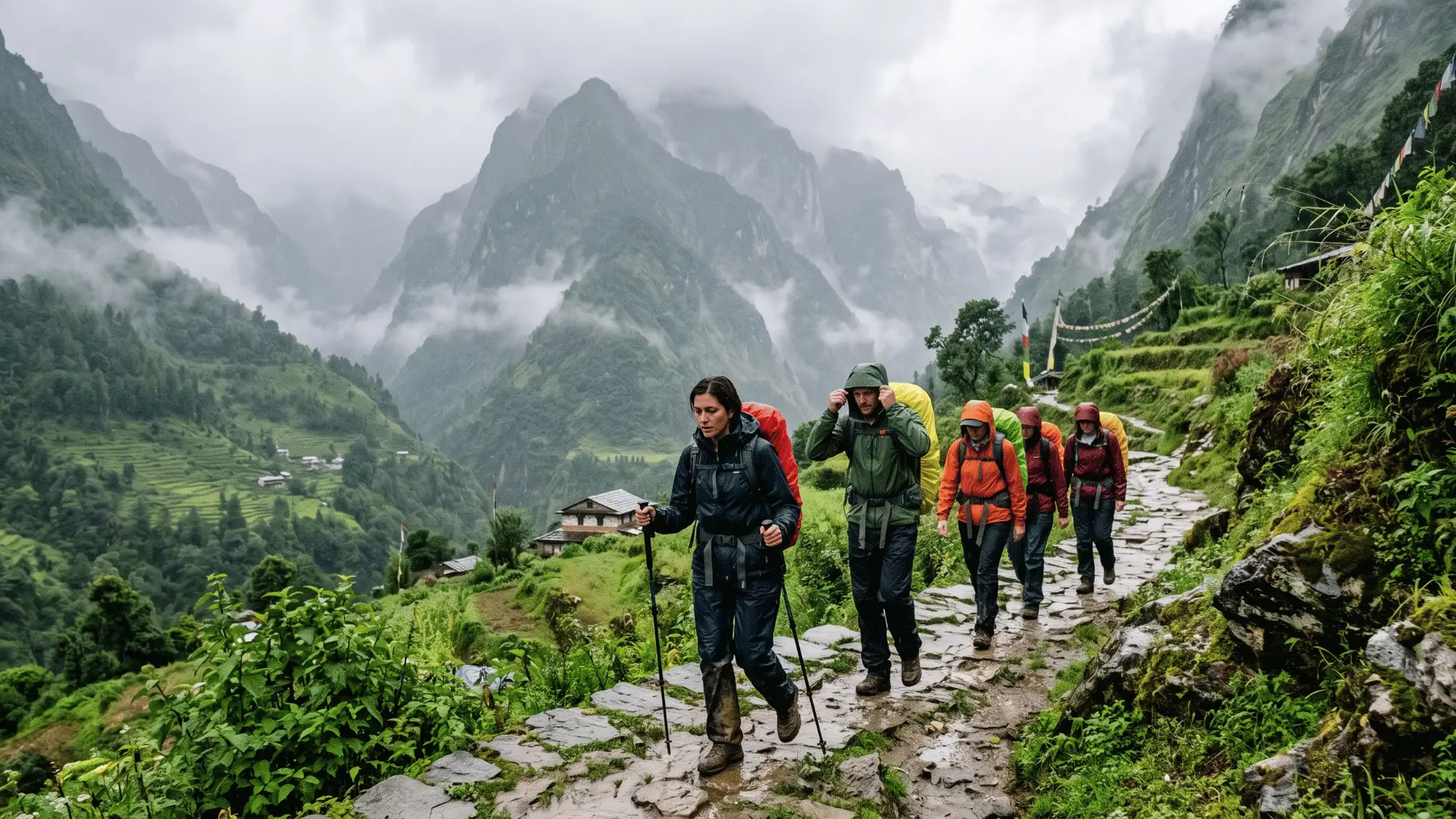
Autumn is generally considered the best time for the Annapurna Circuit Trek. Speaking of months in this season, October and November are ideal because they have stable weather, clear skies, and good trail conditions. April and May in spring are also excellent, especially for blooming wildflowers and colourful trails with fewer crowds.
So, basically, autumn and spring are the best seasons for trekking in the Annapurna Region. They offer favourable weather for trekking in the Himalayas.
Season
Best months
Weather
Trail condition
Crowds
Overall
Spring
March to May
Mild and clear
Good
Moderate
Excellent
Summer/Monsoon
June to August
Wet and cloudy
Muddy in places
Low
Challenging
Autumn
September to November
Clear and stable
Excellent
Higher
Best
Winter
December to February
Cold and snowy
Snow possible
Low
Challenging
Best overall: October to November. Best for spring scenery: April to May. Best for fewer crowds: spring and winter.
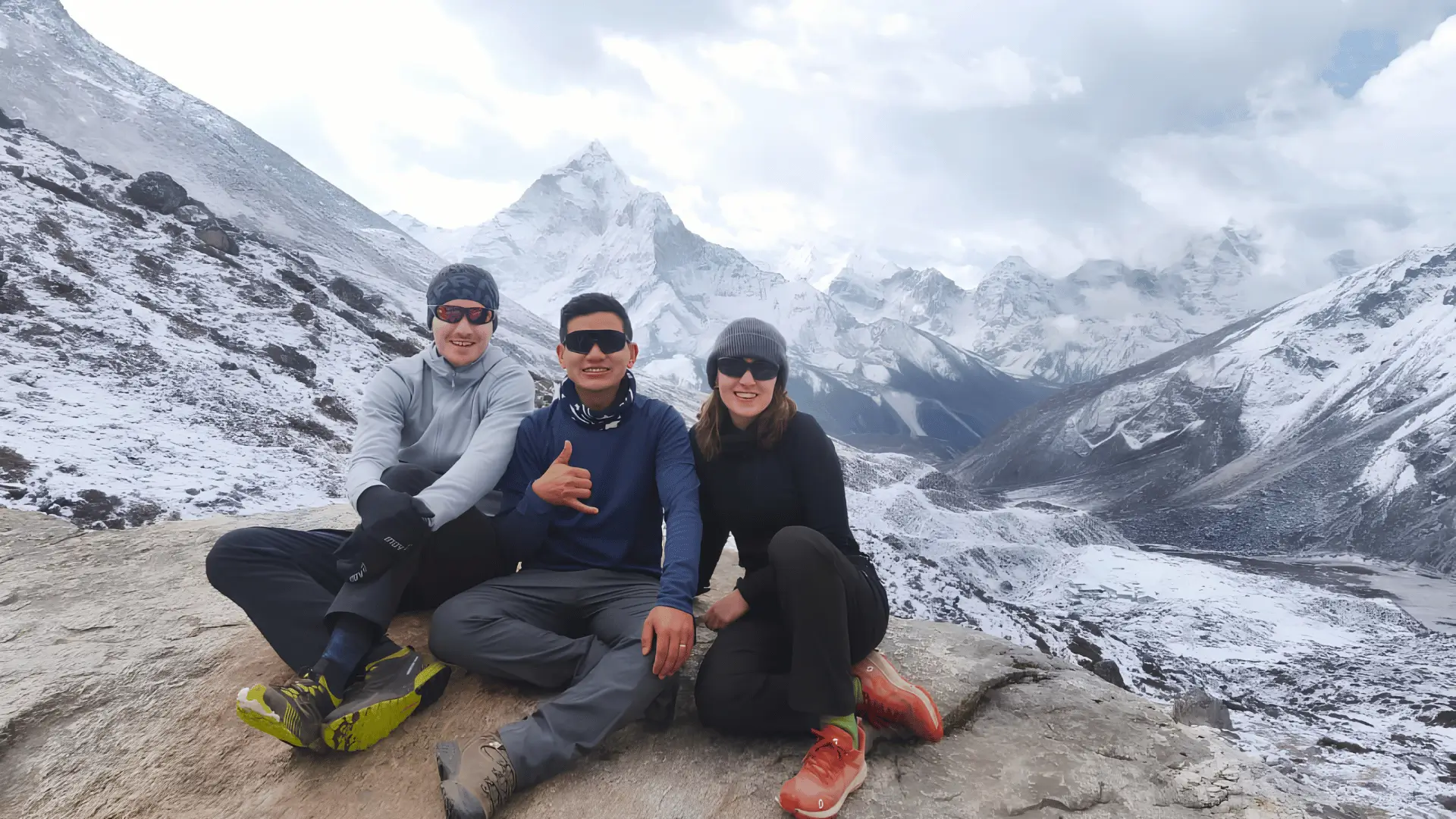
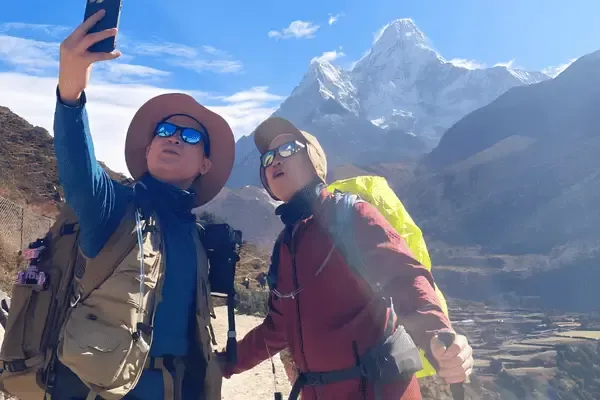
Taking in the views of Ama Dablam with the Blue Pine Trails crew
What Is The Best Time For The Annapurna Circuit Trek
The best time for trekking the Annapurna Circuit is autumn. There are three months in each season of the year, and September, October, and November are in autumn.
Among them, October and November are usually the best choices if you’re curious about when to trek the Annapurna Circuit. The reasons are as follows:
The weather is mostly stable.
The trails are dry.
The skies mostly stay clear.
The mountain views are unbeatable.
Spring, on the other hand, offers blooming rhododendrons, colourful trails, pleasant weather, and longer daylight hours. It consists of March, April, and May and is regarded as a good alternative because the trail experiences slightly fewer crowds at this time.
Although spring and autumn are usually known as the best seasons for this trek, it also varies depending on what you want to experience during the journey:
Clear mountain views: October to November
Best for flowers: March to April
Fewer crowds: March or late November
Warmer conditions: April to May
More snow: December to February
Less chance of heavy rain: October to November and March to April
You can also trek in monsoon (June, July, and August) and winter (December, January, and February), but the weather conditions are mostly unstable, especially during monsoon. Monsoon brings heavy rain, causing trails to become muddy in the lower sections, while winter brings frigid temperatures and snow in the upper sections of the trek.
During the rainy season, lower parts of Manang and Mustang can be affected by heavy rainfall. Nonetheless, the upper areas can remain dry, as they sit in the rain shadow.
Therefore, there’s not a single best season for the Annapurna Circuit Trek. If you want a blend of clear skies and good trekking conditions, plan for October or November, but if you want to enjoy warmer days, a peaceful environment or the trail filled with colourful wildflowers, the whole spring season is for you.
Before choosing a suitable month for trekking, check our Annapurna Circuit Trek itinerary to see how the route, elevation, and daily walking hours fit into your plans.
Annapurna Circuit Trek In Spring: March, April, And May
Nepal Tourism Board (NTB) lists spring (March to May) as one of the two main seasons for trekking the Annapurna Circuit. It’s the post-winter time, so the temperature starts getting warmer, and rhododendron and other wildflowers slowly bring the hills alive with their vibrant colour.
However, just because it’s spring doesn’t mean conditions are all the same throughout the season. These three months may feel slightly different. The lower villages can be quite pleasant, while the higher parts of the route are still cold.
March
Annapurna Circuit in March is just the start of spring, not full-on season. Temperatures are picking up, especially at lower elevations, and you’ll start seeing rhododendrons along the trail. On clear days, the mountain views can be really good too.
Up around Manang and the higher sections, though, it’s still cold. Snow can also linger around Thorong La (5,416 m), so crossing the pass may require more preparation than later in spring. The trek reaches elevations above 5,000 m, so conditions are obviously cold, making your experience different from that in the lower villages.
April
Trekking the Annapurna Circuit in April is a perfect choice if spring is the season you want to trek in. The days are generally comfortable for walking, the rhododendron forests are looking their best in many areas, and clear days can give you excellent mountain views in this time of year.
No doubt, the lower sections experience warm temperatures, but it doesn’t mean the weather is the same everywhere. At higher altitudes, you’ll experience a significant drop in temperatures, especially at night and in the early morning.
Apart from that, this month is popular for trekking during spring. You’ll get a chance to trek peacefully on the trail.
May
You’ll feel warm in the lower sections of the trails when you trek the Annapurna Circuit in May. However, the monsoon gradually starts to show up by late May, meaning the weather becomes slowly less predictable.
Hence, early May is a really nice time to go if you want to trek in this month. Walking and trail conditions: everything you’ll find comfortable and colourful around the lower areas. The higher parts of the circuit remain much cooler no matter when in this month you go for trekking, so the warm weather down below doesn't tell you much about what to expect around Thorong La.
There can also be fewer trekkers than during the busiest autumn period in some parts of the route. If you’re interested in trekking in the Annapurna Region in spring, May can also be a good choice, especially in the first two weeks of this month.
For anyone interested in mountain scenery and rhododendron forests, you can also compare this trek with the Annapurna Base Camp Trek.
Annapurna Circuit Trek In Autumn: September, October, And November
The most popular time for the Annapurna Circuit Trek is usually autumn (September to November) according to the NTB. It’s the post-monsoon season when rain washes away the dust and haze, making the weather thoroughly stable, the skies clearer, and the trails drier by October.
September
Trekking the Annapurna Circuit in September can still be a bit risky, particularly in the first couple of weeks of the month, because the monsoon hasn’t completely vanished by that time. Hence, occasional rain is expected in the lower sections, and you may encounter muddy and slippery trails during the journey. By the end of the month, the weather starts to get settled.
One nice thing about September is the scenery. After months of rain, the hills are green and fresh, and the landscape can look fantastic.
You’ll also generally meet fewer trekkers than you would in October. Consequently, if you’ve got no problem with a bit of disturbed weather, this month can still be a good time to enjoy the Annapurna Region.
October
Annapurna Circuit in October is ideal for trekking. During this month, the monsoon is completely gone, the weather is usually stable, and the skies are mostly clear.
The combination of clear views, comfortable walking temperatures and mostly dry trails makes October a favourite. It’s a perfect time to cross Thorong La. Nonetheless, the weather conditions above 5,000 m are unpredictable and can change in no time, which you should be aware of.
The downside? Crowds. Since October offers good weather conditions, more trekkers are expected to make plans in this month, making the trails and teahouses busy.
November
Trekking the Annapurna Circuit in November is also a good idea, as it keeps the same advantages as October. However, after the first half of the month, winter begins to enter gradually.
Therefore, you’ll experience freezing temperatures at night and early in the morning. Temperatures in Nepal drop as elevation increases, so it’s obvious that the daytime conditions in the lower villages are warm, while it’s much colder at higher altitudes.
Anyway, during the day, you’ll hike under clear and sunny skies. The visibility is usually excellent, and the trails are dry and comfortable to walk. So, if you want both clear skies and fewer crowds on the trail when trekking in the Annapurna Region during autumn, plan the trek for late November.
Annapurna Circuit Trek In Summer/Monsoon: June, July, And August
There’s nothing impossible, actually. So, yes, you can trek the Annapurna Circuit in Monsoon (June to August). However, this season isn’t recommended for any treks in Nepal, as the country is prone to heavy rainfall, resulting in slippery paths, floods, and landslides.
As stated above, the Upper Mustang and Mustang are located in the rain shadow of the Annapurna Region, so there’s usually no issue even during peak rainy season. Nevertheless, the lower or southern part of these two districts face rainfall, making it hard to reach the upper sections.
June
Trekking the Annapurna Circuit in June is relatively good because the month is just the start of the rainy season. The first two weeks usually experience low rainfall. However, as the month goes on, it starts raining more frequently, making the lower areas of the route feel humid and wet.
Even when it isn’t pouring, the clouds cover the skies most of the time, blocking the mountain views. As a result, the dramatic scenery you get in spring and autumn isn’t guaranteed in this month.
July
To trek the Annapurna Circuit in July is something we strongly don’t recommend because the month is the peak time of the rainy season. Frequent rain in the lower altitudes is certain, making the trails completely muddy and slippery.
You need to travel by road via the Prithivi Highway to reach the trek’s trailhead, which is usually Jagat, and landslides blocking the highway are common in Nepal during the season. So it’s even challenging to get to the starting point, but if somehow you make it through and reach the upper sections of the trek, you might get to see views of the peaks in the Annapurna Range.
August
Annapurna Circuit Trek in August is still not a good idea. The skies are remain unclear, and rain is highly expected in the lower villages of the trail. If it isn’t raining, you’ll see a beautiful green landscape. However, when it does rain, the trail can become muddy and slippery, with a high risk of landslides.
Annapurna Circuit Trek In Winter: December, January, And February
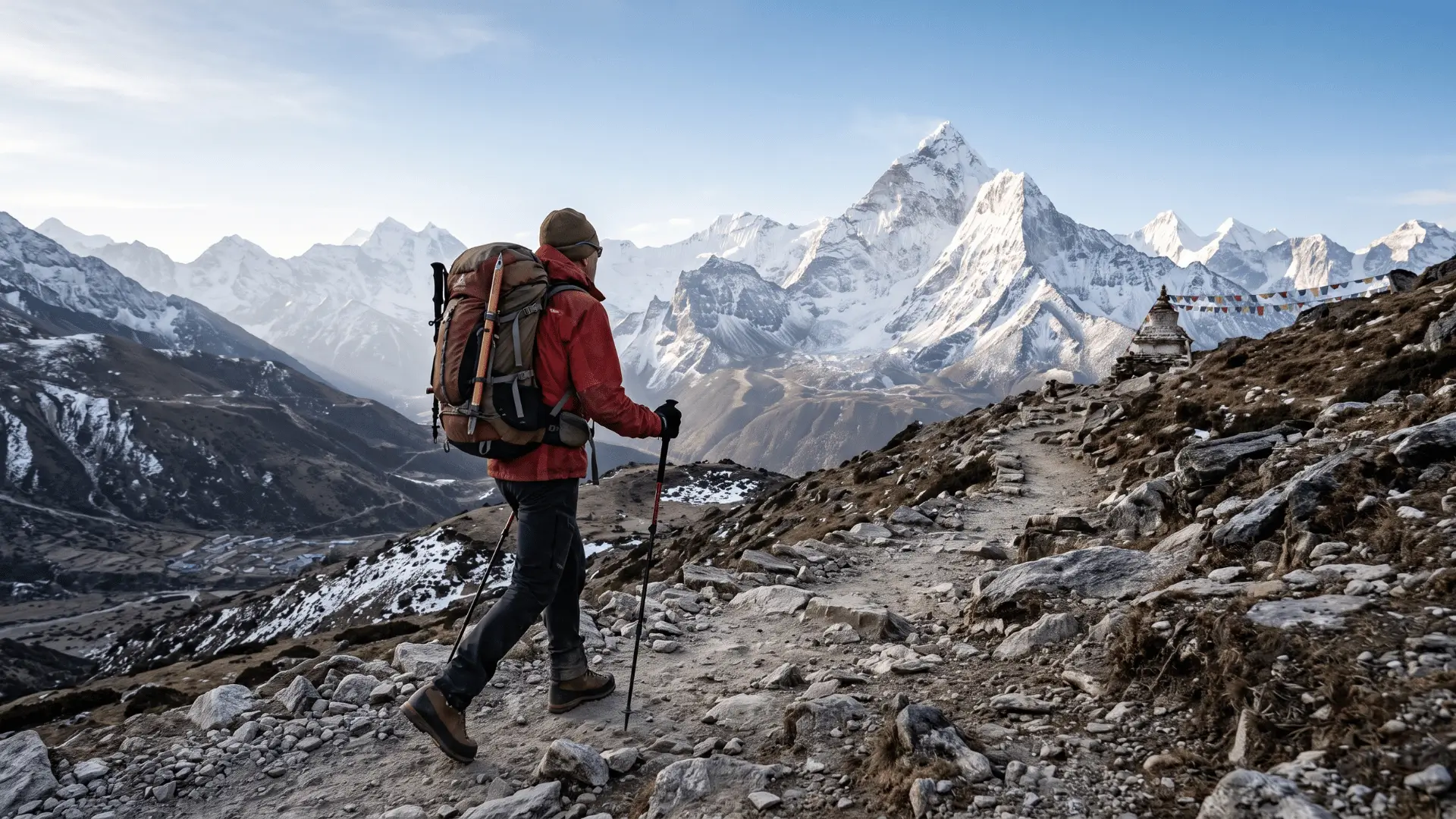
Finding solitude and stunning views on the trail to Ama Dablam with Blue Pine Trails
Winter is probably the quietest time to trek the Annapurna Circuit. You’ll have fewer people around, peaceful trails, and on a clear day, the mountains can look absolutely amazing.
However, the weather conditions are no joke in the higher villages along the trail. It’s extremely cold, particularly at night and early in the morning, and snowfall is common, making the route harder, especially near Thorong La. Even during the daytime, although the sun is up, you still feel a bit cold while hiking.
It doesn’t mean winter trekking in Nepal is impossible; it’s somewhat more doable than in the monsoon. Those who are highly experienced trekkers, know what it feels like to trek in cold weather, are comfortable with altitudes, and want to experience more demanding situations next time can do this trek in winter. Also, the Himalayas appear in their real form, completely white and shiny, in this season.
However, snowfall keeps changing from year to year. Therefore, keep monitoring the latest trail and weather conditions if you’re planning the trip in the cold season.
December
December brings proper winter weather to the circuit. Down in the lower villages, the days can still feel quite pleasant when the sun is out, but temperatures drop quickly as you gain altitude. At higher sections, snow is possible and nights can be extreme.
Nevertheless, there’s also a benefit of trekking the Annapurna Circuit in December: the trail is quiet, with very few tourists. And if the day’s clear, you can enjoy the fantastic mountain views.
The tricky part is that snow on Thorong La can make the crossing difficult, so don't decide to cross just because conditions looked fine a day earlier. Check the latest weather and trail situation before attempting.
January
January is the real test of winter. It’s generally the coldest period, with freezing temperatures and a greater chance of snow around the higher parts of the route.
Crossing the pass can become demanding if there’s been heavy snowfall or the weather turns bad. Teahouses are also open in a limited number during this month compared to spring and autumn. Furthermore, for trekking the Annapurna Circuit in January, you need proper winter gear.
February
Since February is also winter, night and morning temperatures in higher villages remain frigid. However, spring is on its way, so temperatures slowly start to improve, especially after the first half of the month.
Snow can still be an issue around the high sections and Thorong La, so February doesn't automatically mean easier conditions. The late period of the month is usually more suitable if you want to enjoy both quiet trails and mild cold.
Overall, winter is definitely possible on the Annapurna Circuit. Just don't expect the same easy-going conditions you get in October, November or spring.
You'll need warm gear, a little patience and some flexibility in case snow affects the higher sections. If you're prepared for that, the quiet trails and stunning mountain views can be a pretty special part of the journey.
Annapurna Circuit Weather And Trail Conditions By Month
A little rain won't stop this crew
Refer to the table below showing Annapurna Circuit weather by month:
Month
Weather
Rain
Snow
Views
Crowds
Overall
January
Very cold
Low
High possibility
Often clear
Low
Difficult
February
Cold
Low
Possible
Good
Low
Challenging
March
Mild/cool
Low
Possible high up
Good
Moderate
Excellent
April
Mild
Low
Lower risk
Excellent
Moderate
Excellent
May
Warm
Increasing
Low
Good early
Moderate
Good
June
Warm/wet
High
Low
Cloudy
Low
Challenging
July
Wet
High
Low
Limited
Low
Difficult
August
Wet
High
Low
Limited
Low
Difficult
September
Improving
Moderate/high early
Low
Improving
Moderate
Good
October
Mild
Low
Low
Excellent
High
Best
November
Cool
Low
Low
Excellent
Moderate/high
Best
December
Cold
Low
Possible
Often clear
Low
Challenging
Use the table as a general guide rather than an exact forecast because weather conditions in the lower and upper sections can feel very different from each other.
Based on the Annapurna Circuit temperature by month guide, you can enjoy comfortable weather at lower altitudes, but the upper sections surely remain cold no matter the season. Moreover, the more you gain height, the colder you begin to feel. For that reason, the conditions around Thorong La are always different from the lower villages along the route.
Speaking of rain, the trail conditions also differ with elevation. The southern part of the route experiences huge rainfall, while the northern side isn’t affected by rain at all, as it lies in the rain shadow.
How To Choose The Best Month For Your Annapurna Circuit Trek
You shouldn’t be overthinking even if you aren’t sure which month to pick yet, as there’s not one fixed month that’s considered suitable for everyone. The ideal time varies depending on your expectations for the trek: clear views, colourful trails, a peaceful environment, pleasant temperatures, or maybe even snow.
Choose October if
To enjoy stable weather and clear mountain views, October is the perfect choice for you. This month offers dry trails, clear blue skies, and mild temperatures for long hiking days.
However, the huge crowds might bore you a little bit because it’s peak trekking month. Hence, teahouses and trails are expected to get busy.
Choose November if
Go for November if you want those clear skies and excellent views but don't mind things getting a bit colder.
The mornings and nights can feel properly cold at higher elevations, but the visibility can be fantastic. And as November moves along, the number of trekkers starts to drop. So, if you want a quieter version of the autumn trek, late November is worth looking at.
Choose April if
April is an ideal month if you prefer to witness colourful wildflowers along the route with snow-capped mountains in the background. Besides, it offers pleasant daytime temperatures comfortable for trekking.
You also get good spring scenery without having to deal with the deep cold of winter. For many trekkers, April is probably the sweet spot of the spring season.
Choose March if
Pick March if you want that fresh spring scenery but would rather have fewer people around. The weather is starting to warm up, and the first rhododendrons begin appearing.
The mornings are still cold like in winter, especially at higher altitudes, so pack accordingly. But if a quieter trail matters to you, March can be a really nice choice.
Choose December To February if
Want to see snow? Plan for winter.
The Annapurna Circuit is quiet, with fewer travellers from December to February, but the cold is on another level at higher elevations. Snow can hinder your travel, especially near Thorong La, and conditions can change enough to force you to adjust your plans.
So I'd only suggest winter if you're already comfortable with off-season trekking, cold temperatures and a bit of uncertainty.
Think carefully about June To August if
If you’re not an experienced trekker, don’t think about planning the Annapurna Circuit Trek in monsoon, even if you like rain. You’ll go through a lot when trekking at high altitudes during this season, such as muddy and slippery paths, and you can even face landslides in southern parts of the trail.
The northern sections don’t experience heavy rainfall because of their rain shadow locations. However, even if there isn’t much rain, the skies are mostly cloudy, resulting in poor mountain views.
So, if you want the best month for beginners on the Annapurna Circuit, plan this adventure in October or April. These months offer conditions that are generally more forgiving.
Want the best month for mountain views? October and November are hard to beat. Looking for quieter off-season trekking? March or late November stands to be better for you.
Once you've picked your month, check the Annapurna Circuit Trek cost to work out your trekking budget for permits, accommodation, food, transport and guide services.
Tips For Planning The Annapurna Circuit Trek Around The Weather
April in spring and October and November in autumn are good months to pick among for trekking in Nepal, yet the weather in the Himalayas is uncertain and can change in no time. A bit of preparation for the Annapurna Circuit Trek before you leave can save you a lot of trouble later.
Check The Weather Up High
Don't just check the weather for the village you're sleeping in. This is especially important before crossing Thorong La.
The weather in Manang can look perfectly fine while conditions in Thorong La are completely different. It's a high pass, after all. Cold wind, snow, or poor visibility can make the crossing much more challenging than it looks from below.
Don't Make Your Itinerary Too Tight
This is something trekkers sometimes underestimate. It's tempting to plan everything down to the exact day, including your Thorong La crossing. Your itinerary should be flexible, so you can wait an extra day and not have to worry about completing your adventure according to the itinerary due to bad weather.
Pack For Both Warm And Cold Weather
During the daytime, you hike in a T-shirt and even feel warm, but once the sun goes down and you reach your destination for the night, things change completely, and you’ll need to put on your down jacket. This is because you can start hiking at a lower altitude and reach a higher elevation by evening, and the temperature can drop pretty noticeably. According to NTB, the temperature usually falls by around 6°C for every 1,000 m of altitude gain.
So, layers are your friend. You can add or remove them as needed instead of carrying one ridiculously thick jacket everywhere.
Take Rain Protection Seriously
Heading out in late spring or monsoon? Remember to pack a raincoat and a rain cover for your bag.
These two rain gear items are basics that you must have in your backpack. They help keeping your clothes and sleeping bag dry, and yes, even if the weather forecast for your travel dates looks fine, you still pack them just in case.
Be Ready For Snow
If you plan to trek in winter, early spring, or late autumn, be prepared for snow in upper sections at any time. The lower parts of the circuit might look completely clear while the trail around the high pass is covered.
Not necessary that you’ll encounter a huge snowstorm, yet early preparation for the worst helps you avoid bad situations at least to some extent. Snowfall in the higher elevations of Manang and Mustang is more likely.
Start Early For Thorong La
If you're crossing Thorong La, getting an early start is a good idea. It gives you more time to reach the pass and, just as importantly, gives you some extra time if something doesn't go according to plan. You don't want to be halfway across the pass late in the day thinking, “I should've left earlier.”
Ask People On The Trail
Checking the weather forecasts is helpful, but it's still worth asking people, such as your guide, teahouse owners or other trekkers, who are actually there about the current conditions. They may have an idea about fresh snow, mud, and slippery sections ahead on the trail, as well as whether the weather around the pass has been causing issues. This kind of local information can be incredibly useful, especially when conditions are changing.
Don't Choose Your Month Just Because Of Temperature
Temperature is merely one small part of the decision. When planning your trekking preparation, you should be concerned about the entire scenario:
How much rain is likely?
Is there a chance of snow?
Will you get good mountain visibility?
How busy will the trail be?
What are the trail conditions like?
Will teahouses be open and easy to find?
What could conditions around Thorong La be like?
Are you experienced enough for the season you’re choosing?
For example, October is the perfect time for trekking as it offers clear skies, yet it also has drawbacks: trails and teahouses get busy and packed. Winter offers quieter trails but experiences freezing temperatures and occasional snowfall. And although the northern side of Manang and Mustang stays dry because of their rain shadow location, the southern side is likely to be wet and full of landslide risk.
You should pack your trekking essentials based on the season you’re going, so check our Annapurna Circuit Trek packing list before you start buying or packing your items.
The main thing isn’t to give the weather a chance to make you afraid. Just respect it.
Since the Annapurna Circuit passes through several environments, the weather at one altitude doesn’t necessarily stay the same a few hours later. So, a little weather preparation, some flexibility and the right gear can help you deal with changing conditions.